
 EN
EN
 ar
ar bg
bg hr
hr cs
cs da
da nl
nl fi
fi fr
fr de
de el
el hi
hi it
it ko
ko no
no pl
pl pt
pt ro
ro ru
ru es
es sv
sv tl
tl iw
iw id
id lv
lv lt
lt sr
sr sk
sk sl
sl uk
uk vi
vi et
et hu
hu th
th tr
tr fa
fa ms
ms hy
hy ka
ka ur
ur bn
bn mn
mn ta
ta kk
kk uz
uz ku
ku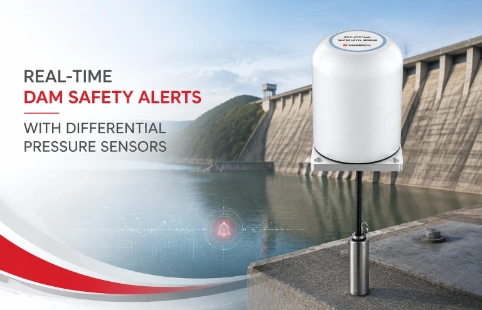
Real-Time Dam Safety Alerts with Differential Pressure Water Level Sensors
Key Takeaways An alert chain needs more than a sensor: define field in...

Moisture Sensor for Soil: Precision Monitoring Solutions
In geotechnical engineering, moisture content is one of those quiet factors that can destabilize a slope or change how a foundation settles. You see it in heavy rainfall seasons when readings drift and suddenly a perfectly routine site needs a second look. Kingmach has been building moisture sensors for soil for projects where these shifts matter—whether on a highway embankment, a tailings dam, or a research plot measuring crop water use. Our sensors use frequency domain reflectometry (FDR), a middle ground between cost and long‑term stability. They are installed directly in the ground or inside boreholes, often alongside tensiometers or pore pressure transducers, to give site teams a clearer picture of what water is doing in the soil profile. Because every site is different, we offer custom cable lengths and logging intervals; for large deployments, low‑power SDI‑12 versions keep field wiring manageable. When you need a moisture sensor for soil that can handle seasonal saturation and dry spells without drifting, the focus really becomes about material choices: stainless steel electrode rings, epoxy‑sealed electronics, and cable jackets that survive backfill operations. That is what we manufacture and what our distributors stock worldwide.
Technical Detail
A moisture sensor for soil from Kingmach is built for continuous in‑ground use, not just spot checks. The measurement cell relies on the soil's dielectric constant, which changes predictably with water content. The sensor outputs volumetric water content (VWC) as a percentage, typically with a resolution of 0.1% and an accuracy better than ±3% after site‑specific calibration. One thing field technicians appreciate is that the sensor runs on a low supply voltage—6 to 15 V DC—and draws only a few milliamps during active measurement, so it fits into battery‑powered loggers common in remote monitoring stations. Output options include 4‑20 mA, 0‑2.5 V, and SDI‑12 digital; SDI‑12 is especially useful when you have multiple sensors on the same data logger because you can address them individually over a simple three‑wire bus. The standard sensing volume is roughly 1 L of soil, and the probe length is 5‑10 cm, which means it averages moisture across the root zone or a specific soil horizon rather than at a single point. The housing is IP68‑rated, made from stainless steel and engineering plastics, and the electronics are fully potted so they survive submersion and freeze‑thaw cycles. Kingmach can also supply the sensor with an integrated temperature thermistor, which lets you apply temperature compensation to moisture readings—something we recommend for slopes that see large daily temperature swings. Because no two projects are identical, we keep a wide inventory of standard models and can adjust cable lengths, connector types, or probe dimensions for bulk orders. Technical support comes from engineers who have used these instruments on their own sites, so when you call about an installation question, you are likely speaking with someone who has actually trenched a sensor into a slope or calibrated one in a gravelly silty clay.
News
Key Takeaways An alert chain needs more than a sensor: define field in...
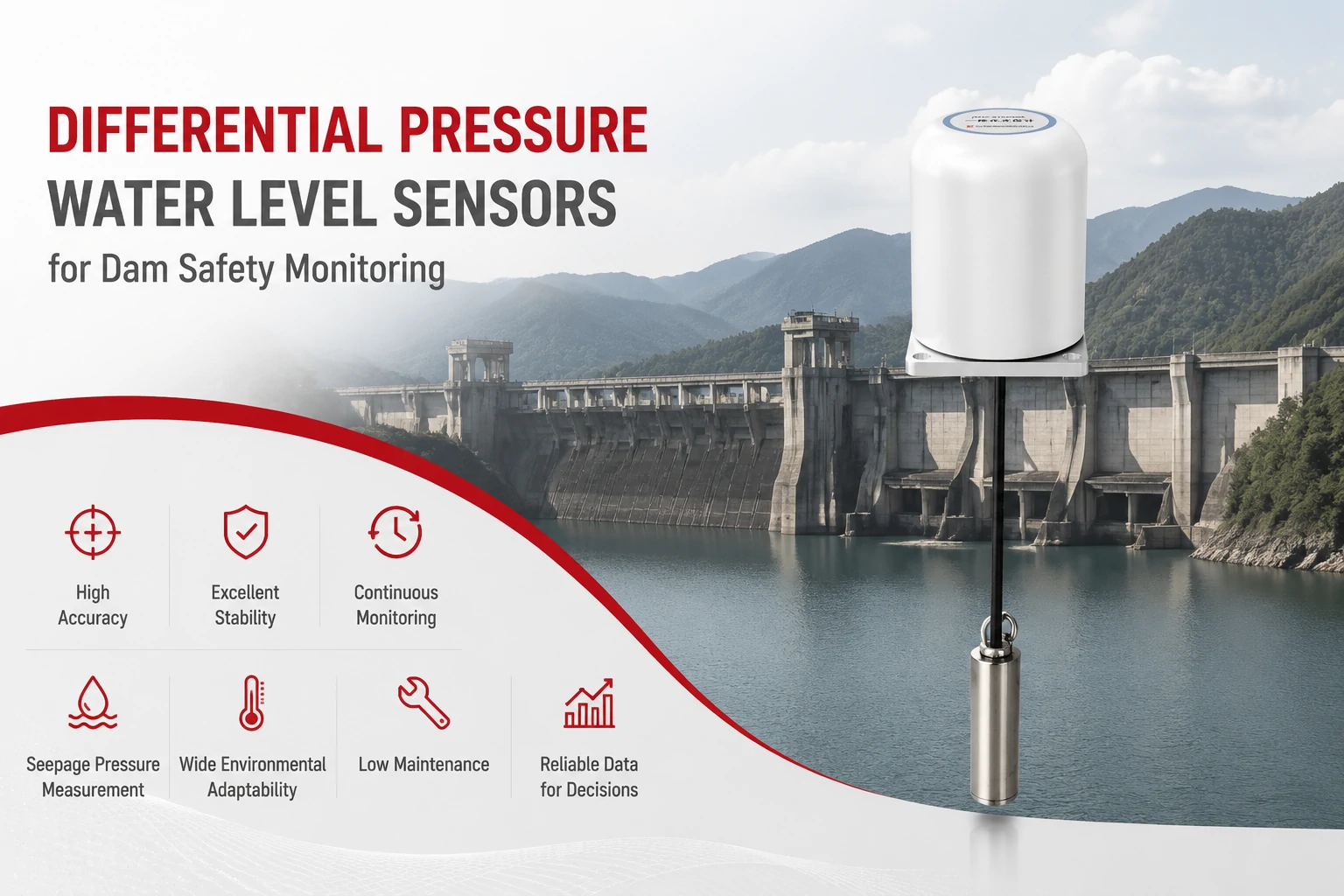
Key Takeaways The strongest fit is usually a confined, submerged, or s...
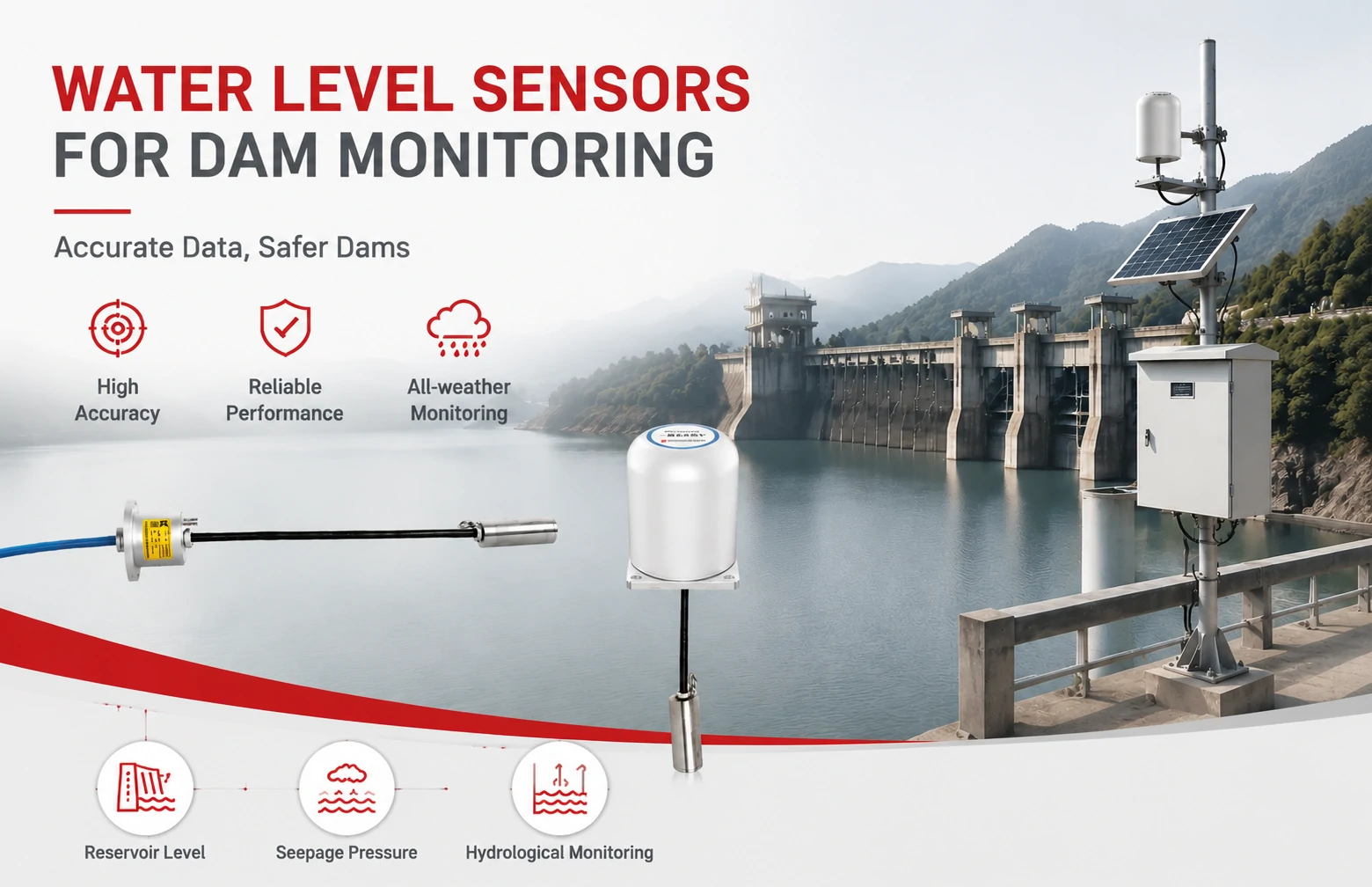
Kingmach Water Level Sensors for Dam Monitoring: A Buyer's Guide to Differential Pre...
Products
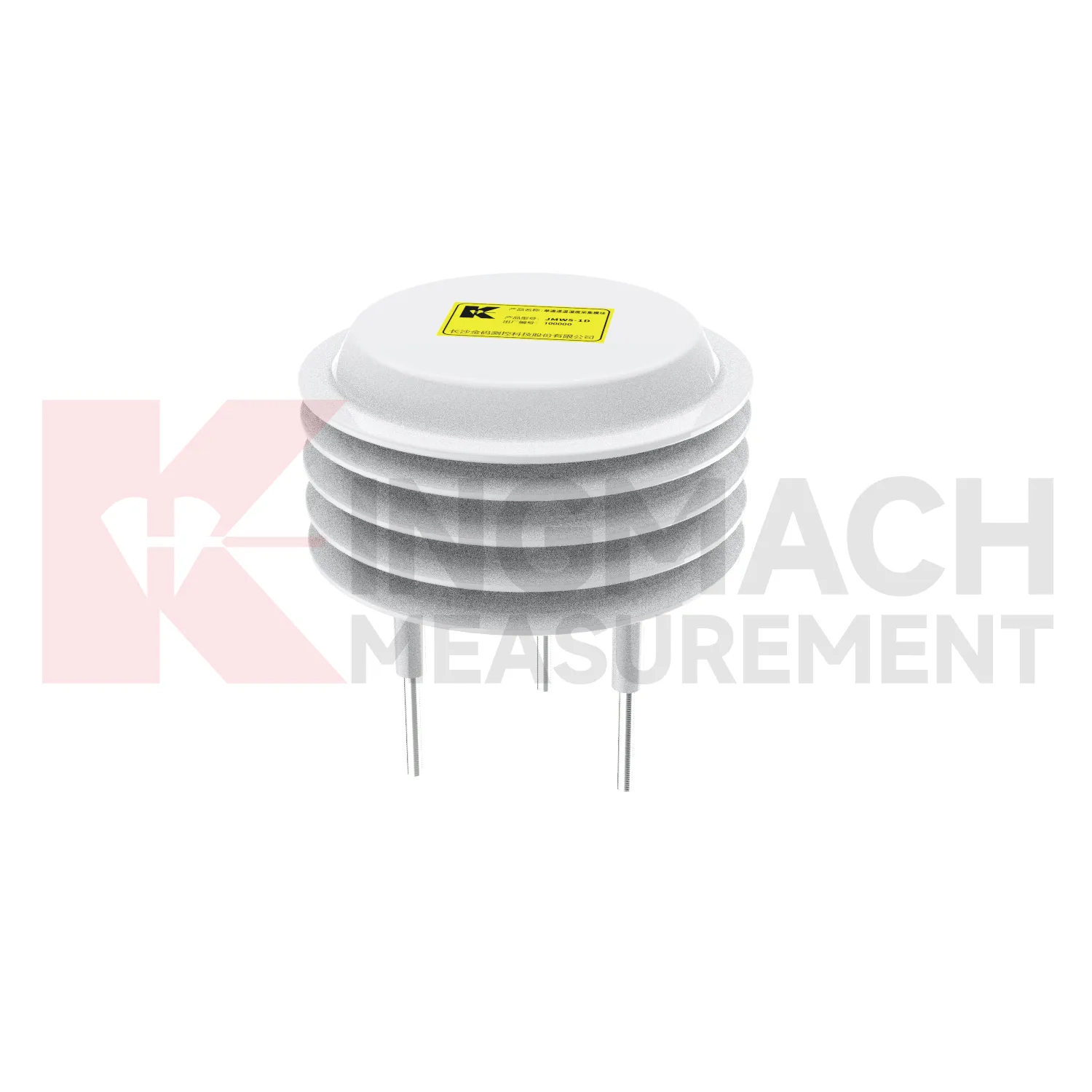
Single-Channel Temperature and Humidity Acquisition Module JMWS-1D
View Details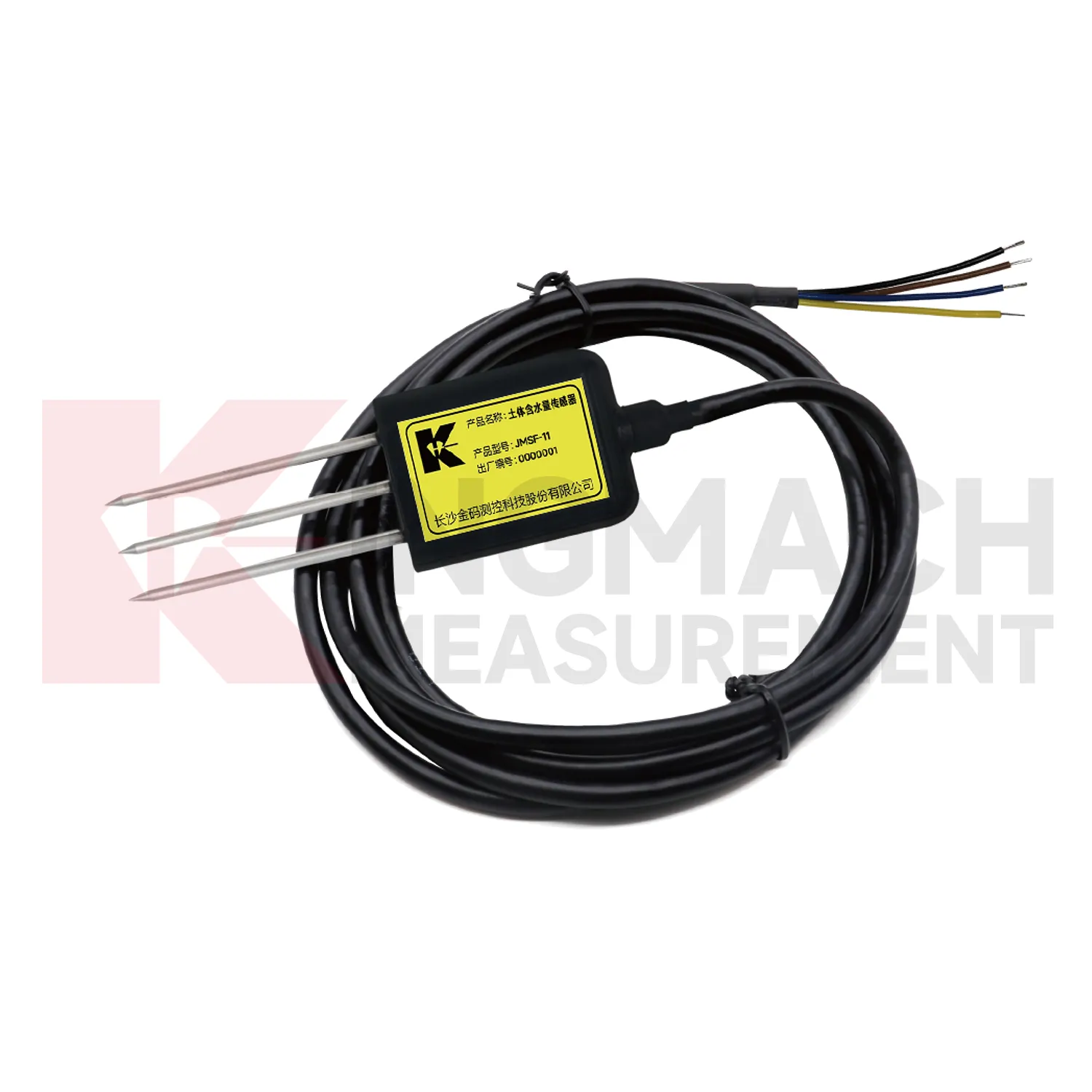
FAQ
Both measure the soil dielectric constant, which changes with water content. TDR (time domain reflectometry) sends a fast pulse along a probe and times its reflection; it tends to be more accurate in salty or high‑clay soils but costs more. FDR (frequency domain reflectometry) uses an oscillator and measures the frequency shift; it is simpler, lower power, and works well in typical mineral soils. Kingmach primarily manufactures FDR sensors because they offer a good balance between cost and long‑term reliability for routine geotechnical and agricultural monitoring.
The sensor body is typically 10–20 cm long, and you install it at the depth of interest—whether that is 20 cm for turf root zones or 2 m for landslide shear zones. The depth limit usually comes from the cable and the installation method, not the sensor itself. We supply cables up to 100 m with reinforced jackets, and for deep boreholes we recommend using a rigid PVC conduit to guide the sensor into place and protect the cable during backfilling.
Factory calibration works well for many mineral soils, giving volumetric water content with about ±3% error. But if your site has high organic matter, heavy clay, or very coarse sand, we suggest a site‑specific calibration using the gravimetric method. Our team can provide a simple procedure: take a few disturbed samples at different moisture levels, oven‑dry them, and we will help you work out a polynomial correction. Many data loggers let you store these coefficients so that readings are adjusted on the fly.
Yes, the electronics are potted and the housing is rated IP68, so the sensor can handle freeze‑thaw cycles. What changes is that liquid water turns to ice, so the dielectric reading drops sharply—the sensor is measuring the unfrozen water content. This can actually be useful for detecting frost depth. Just be sure to use a cable with a cold‑flex jacket, which we offer as an option, to prevent jacket cracking.
It depends on the output type. With 4‑20 mA sensors, you need one analog input per sensor, so you are limited by the logger’s channel count. With SDI‑12 digital sensors, you can connect up to 62 sensors on a single bus, each with a unique address. For large‑scale monitoring networks, we recommend SDI‑12 because it simplifies wiring and lowers overall cost. Most of our field technicians can set up a 10‑sensor array with SDI‑12 in under an hour using off‑the‑shelf loggers.
Share your product type, target capacity, and application requirements. Our team can review the details and recommend a practical next step.
If you are interested in our products or want to become our partner.
Please leave your contact information, our team will contact you as soon as possible.
Mail: [email protected]
Contact Us: +8613808434127
Address: No. 188 Tongzipo West Rd, Changsha, Hunan, China